Ananya, a talent acquisition lead at a growing logistics company, had a familiar problem. A job posting shared on Friday had drawn hundreds of applications by Monday morning.
The resumes arrived in different formats, each organized differently. Before she could shortlist anyone, Ananya had to open each document, find the relevant details, and enter them into a spreadsheet.
By Wednesday, she was still working through the pile. Meanwhile, candidates who could have been a great fit were moving forward with other employers.
The problem was not a lack of applicants. It was the time needed to process them. This is where automatic resume parsing makes a difference.
What Is Automatic Resume Parsing?
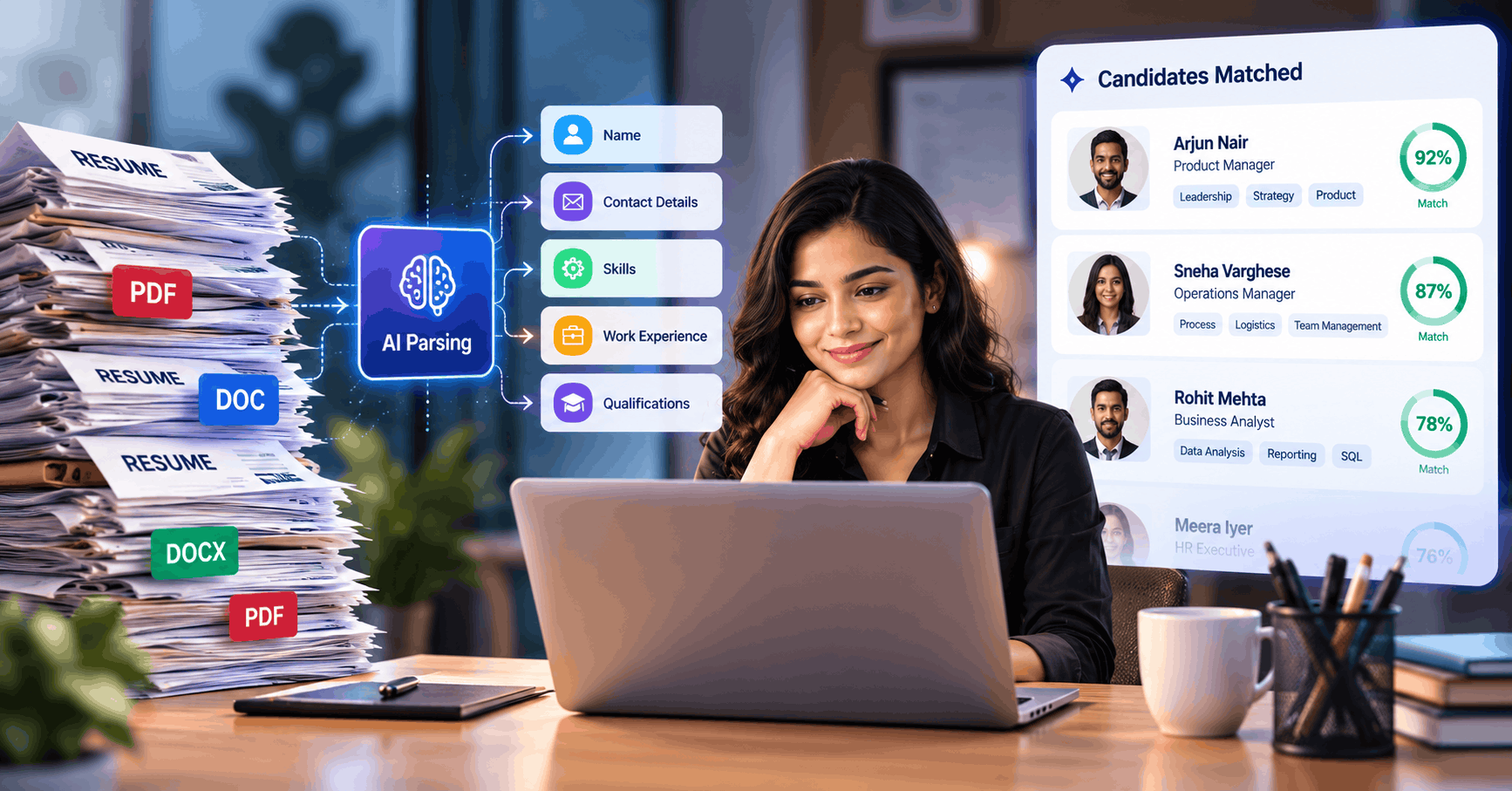
Automatic resume parsing uses artificial intelligence to read a resume and pull out the information that matters: skills, experience, and qualifications. Instead of reading every document line by line and typing details into a spreadsheet, recruiters get that information in one organized place.
An AI resume parser can also read job descriptions in the same way. That means both sides of the hiring equation, the role and the candidate, are captured as structured information that can be compared.
Why Manual Resume Processing Slows Down Hiring
Reading and recording resumes by hand creates several problems:
- Hours lost to admin: Recruiters spend their first days organizing information instead of evaluating people.
- Inconsistent records: When different people record details differently, candidates become hard to search and compare.
- Recruiter fatigue: Repetitive tasks leave less energy for conversations and interviews.
- Missed opportunities: When volumes grow, relevant candidates are easy to overlook.
These problems get worse when a team hires for several roles at once.
How AI Resume Parsing Works
- Read: The parser reads the resume and the job description.
- Extract: It identifies the key details, including skills, work experience, and qualifications.
- Organize: Those details are stored in a consistent, searchable format.
- Match: The candidate’s profile is compared with the job requirements to produce a match score.
- Review: The recruiter looks at the results, checks the details, and decides who moves forward.
Automation handles repetitive reading. Recruiters keep the judgement.
Why Explainable Matching Matters
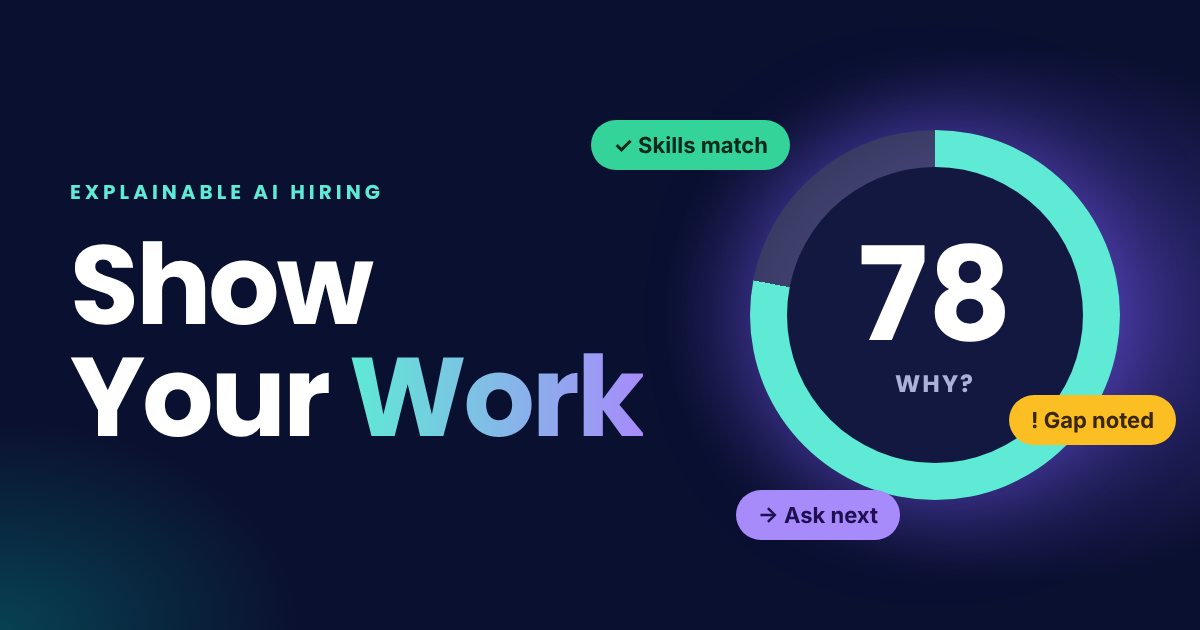
A match score is only useful if you can trust it. A score that appears without any reasoning forces recruiters to either accept it blindly or ignore it.
Explainable matching shows why a candidate was considered a fit for a role. Recruiters can see which skills and experience line up with the job description and decide for themselves whether the match holds up. This keeps people in control of the decision and makes conversations with hiring managers easier, because every shortlist has a clear rationale.
Recruiters should also consider the principles of responsible AI in recruitment, including transparency, fairness, and appropriate human oversight.
Benefits of Resume Parsing Software
- Faster candidate shortlisting: Less manual data entry means recruiters reach the evaluation stage sooner.
- Easier searching: Structured information makes it simpler to find relevant candidates when a new role opens.
- More consistent screening: Every candidate is described using the same fields, which makes comparison easier.
- Clearer decisions: Match scores with reasoning give hiring teams something concrete to discuss.
- More time for people: Recruiters can spend their hours on conversations, relationships, and interviews.
What to Look for in Resume Parsing Software
When comparing tools, ask:
- Does it read both resumes and job descriptions?
- Does it explain its match scores or only display them?
- Can recruiters review and correct the information it extracts?
- Does it save time in your day-to-day workflow?
The best tool is one that makes recruiting simpler without making decisions harder to understand.
Give Recruiters More Time for What Matters
Return to Ananya’s Monday. With resumes already read and organized, she can begin with a clear view of who matches the role and why. Her first day goes to speaking with candidates, not typing into a spreadsheet.
Automatic resume parsing does not take people out of hiring. It gives them back the time to do the part only people can do: understanding other people.
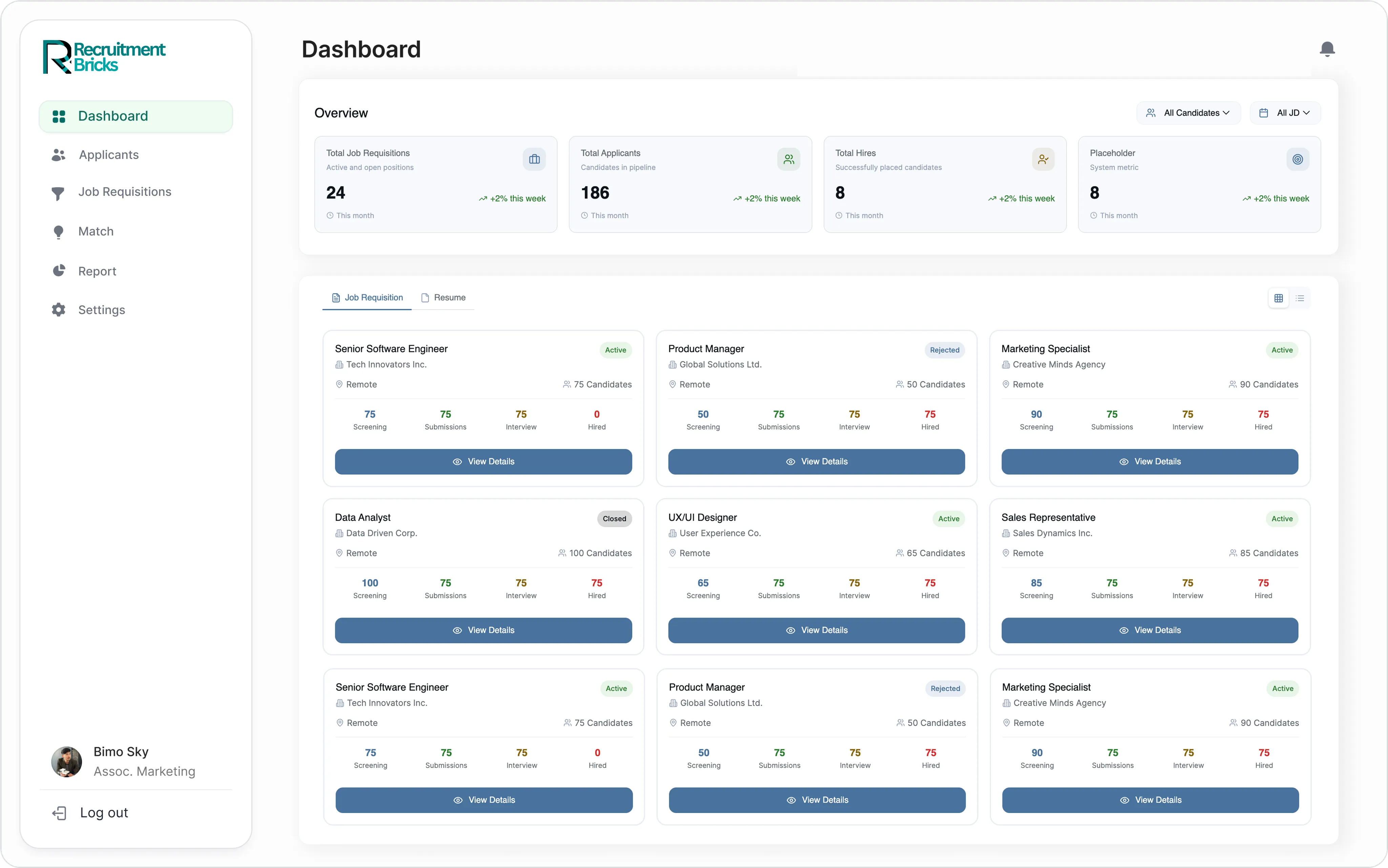
Explore Recruitment Bricks AI to see how AI resume parsing and explainable candidate matching can support your hiring workflow.
Book A Demo
Frequently Asked Questions
1. What is resume parsing?
Resume parsing is the automatic extraction of information from a resume, such as skills, experience, and qualifications, into a structured format.
2. What information can an AI resume parser extract?
It can extract a candidate’s skills, work experience, and qualifications from a resume. It can read job descriptions in the same way.
3. What is a match score?
A match score compares a candidate’s resume with a job description to show how closely they line up. Explainable matching also shows the reasons behind the score.
4. Does automatic resume parsing replace recruiters?
No. It handles repetitive reading and organizing. Recruiters still review candidates, communicate with them, and make the hiring decisions.
5. How does resume parsing help recruiters find candidates faster?
Because candidate details are stored in a consistent format, recruiters can search and compare candidates more easily instead of reopening individual documents.